5 Hidden Features of the Arctis Pro Wireless You Must Know About
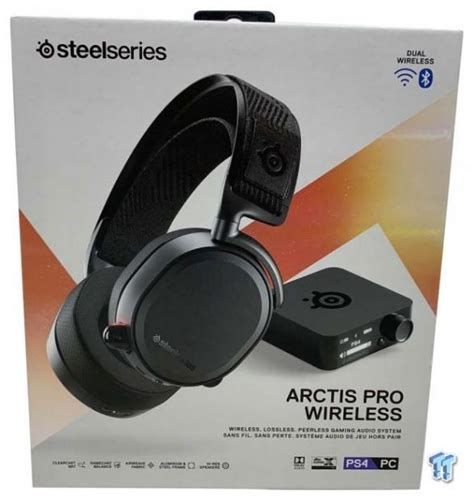
The SteelSeries Arctis Pro Wireless is a flagship gaming headset that often gets praised for its comfort, soundstage, and professional-grade microphone. Beyond the headline specs — dual wireless, swappable batteries, and a Hi-Res-capable DAC — there are several lesser-known capabilities that meaningfully improve real-world use. This article highlights five "hidden" features of the Arctis Pro Wireless, explains how to use them, and shows why they matter for streamers, competitive players, and music-loving gamers alike.
Introduction: Why these hidden features matter
Buyers typically care about comfort, sound quality, battery life, platform compatibility, and reliability. The Arctis Pro Wireless checks many of those boxes out of the box, but the device's deeper functionality unlocks better workflows and long-session endurance. Understanding and using these features turns a high-quality headset into a flexible hub for mixed-use setups — from PC audio production to couch-console gaming and mobile phone calls — without juggling multiple devices.
Hidden Feature 1: True hot-swap dual-battery system (real-world endurance)
Most consumers see "two batteries" listed in a spec sheet and assume longer total runtime. The Arctis Pro Wireless makes the dual-battery concept genuinely practical: the headset uses removable 2.4GHz battery modules and includes a charging base so one battery charges while the other powers the headset.
How it’s used
- Keep one battery in the charging dock and one in the headset for seamless swaps.
- For all-day streams or LAN marathons, swap batteries during breaks without powering down the headset.
- Store an extra charged battery in a bag for travel, ensuring uninterrupted use on long flights or routes without easy charging.
Real-world scenario: a streamer running a 6–8 hour session can run indefinitely by swapping batteries between breaks, avoiding mid-stream interruptions caused by recharging. At LAN events, this setup eliminates the need for wall outlets near a chair and lowers stress about battery levels.
Practical tip: Cycle the batteries periodically and avoid leaving one in a discharged state for weeks. Using the charging base regularly preserves battery longevity.
Hidden Feature 2: Simultaneous lossless 2.4GHz + Bluetooth — true multipoint with prioritization
Many wireless gaming headsets force a trade-off between low-latency gaming audio and convenient Bluetooth pairing. The Arctis Pro Wireless supports a lossless 2.4GHz connection for game audio while simultaneously receiving Bluetooth for calls, music, or chat on mobile devices. That's more than convenience — it allows real multitasking without swapping devices.
How it’s used
- Connect the base station to a PC or console via USB or optical for primary game audio, and pair a phone over Bluetooth for voice calls or music notifications.
- Adjust levels on the base station: prioritize the 2.4GHz signal for gameplay and route voice calls through Bluetooth at lower volume, or vice versa when on a call.
- Use Bluetooth for chat apps on mobile while maintaining the ultra-low latency 2.4GHz feed for competitive gaming.
Real-world scenario: a console player can play with minimal audio lag while still hearing incoming voice calls or managing party chat on a phone, avoiding missed calls during a match. Streamers can monitor stream audio via the PC connection and accept a co-host's call through Bluetooth without losing sync.
Note: When engaging Bluetooth for real-time voice chat, expect a small difference in latency vs. the 2.4GHz feed. The headset’s interface lets users balance volumes so the perceptual gap is minimized.
Hidden Feature 3: Built-in GameDAC with true Hi-Res audio mode
The Arctis Pro Wireless base station doubles as a GameDAC — a dedicated digital-to-analog converter with a 24-bit output path that supports high-resolution audio. This isn't simply marketing; it gives a notably cleaner sound signature for lossless sources compared with many other gaming headsets.
How it’s used
- Connect the base station to a PC via USB and set the GameDAC as the default audio device in the operating system.
- Enable the Hi-Res mode in the SteelSeries Engine software to unlock 24-bit output where the source and audio chain support it (lossless game audio, FLAC music, studio content).
- Use optical input for consoles that support higher bitrates and keep USB for PC playback to maintain consistent quality across platforms.
Real-world scenario: a user who both games and listens to music will notice cleaner mids and more controlled bass when switching to Hi-Res mode for music playback. For competitive players, the improved clarity aids positional audio cues, such as the difference between footsteps and environmental noise.
Practical tip: Use uncompressed or losslessly compressed audio sources to benefit from the GameDAC. Streaming services using aggressive compression may not fully utilize the Hi-Res path.
Looking for the best Audio & Headphones deals on Amazon?
Shop Amazon →Hidden Feature 4: Advanced chat mixing, EQ presets, and onboard memory
The Arctis Pro Wireless supports granular audio profiles: chat/game mix (ChatMix), parametric EQ adjustments, and the ability to store settings on the base station. Many owners overlook how powerful the onboard memory and software-mounted presets are for different activities.
How it’s used
- Create and save multiple EQ presets for distinct activities: one for competitive shooters (boost highs and mids for footsteps), one for music (wider frequency balance), and one for voicework or streaming (reduced low-end rumble).
- Use ChatMix to dial in how much party chat versus game audio is heard. This is invaluable for streamers who need to hear both game audio and guest voices clearly without mixing in-stream audio manually.
- Save a profile to the base station so settings persist when moving between systems or consoles without reconfiguring software.
Real-world scenario: tournament players can load a "competitive" profile when practicing, then switch to a "casual" or "music" profile when relaxing — all without software on the connected device. Content creators can balance incoming co-host audio and game sound quickly during a live show.
Note: SteelSeries Engine allows more detailed control, but the convenience of storing profiles onboard makes the headset far more portable between setups.
Hidden Feature 5: Multiple input prioritization and platform-friendly routing
The Arctis Pro Wireless base station has several physical inputs — USB, optical, and a 3.5mm line-in — and a menu that controls input prioritization. That capability turns the base into a small audio hub, rather than a simple transmitter.
How it’s used
- Connect a console via optical and a PC via USB, then configure the base station to treat one input as the primary game feed while the other is secondary. This makes switching sources seamless during breaks or co-op sessions.
- Route chat through the console’s party chat system and game audio through the PC, or vice versa, using the input priority settings. This is particularly useful for streamers who want console visuals but PC-based streaming software.
- Use the line-in for an extra device (tablet, phone, or dedicated mixer) and set its priority so it takes over when active — practical for voice guests on mobile calls or a backup audio source.
Real-world scenario: a household with a single headset shared between family members and different devices can keep the headset on a single desk and switch use cases without reconnecting cables or re-pairing devices.
Detailed product review — strengths, limitations, and real-world performance
Build & comfort: The Arctis line shines for long-session comfort, and the Pro Wireless continues that trend with its ski-goggle suspension band and plush AirWeave ear cushions. Users who wear glasses report less pressure and fewer hot spots than with many clamping sports headsets.
Audio quality: When using the GameDAC and Hi-Res mode, the Arctis Pro Wireless delivers a clean, neutral presentation with an emphasis on clarity. Wide frequency response improves positional cues and music fidelity compared with typical gaming headsets. The detachable ClearCast mic offers broadcast-quality pickup and noise rejection in most household environments.
Battery & connectivity: The swappable batteries and dual-link design enable virtually uninterrupted sessions and flexible device pairing. The 2.4GHz link is robust in most home environments, but, like all wireless devices, performance can degrade in crowded 2.4GHz spectrums — for example, in dorms or events with many routers and devices.
Software & ecosystem: SteelSeries Engine provides the deeper controls not accessible via the headset itself, including EQ, mic gain, and firmware updates. The ability to save profiles to the base is critical for users who switch systems frequently.
Limitations: The headset is relatively heavy compared with ultra-light casual models, and the price point positions it toward enthusiasts and pros rather than casual players. The base station is also an extra piece of hardware to manage, which matters for minimalist desks or mobile setups.
Shop the latest Audio & Headphones picks on Amazon.
Shop Amazon →Pros & Cons
Pros
- Hot-swap battery system: practically unlimited runtime with spare charged battery.
- Lossless 2.4GHz + Bluetooth: simultaneous low-latency gameplay and mobile connectivity.
- GameDAC and Hi-Res support: true high-fidelity audio for music and detailed in-game cues.
- Advanced chat mixing and EQ: flexible profiles and onboard memory for fast switching.
- Multiple inputs and routing: versatile hub for mixed console/PC households and stream setups.
Cons
- Price: positioned at the premium end of the market.
- Weight and desk footprint: base station and battery modules make it less portable than simple Bluetooth headsets.
- 2.4GHz interference: susceptible to crowded wireless environments (common to all 2.4GHz wireless audio).
- Requires software for full control: some advanced features are more accessible via SteelSeries Engine.
Comparison Table: Arctis Pro Wireless vs Alternatives
| Feature | Arctis Pro Wireless | Arctis 7 (Wireless) | Arctis Pro + GameDAC (Wired) |
|---|---|---|---|
| Wireless Type | Lossless 2.4GHz + Bluetooth (simultaneous) | 2.4GHz only (no simultaneous BT) | Wired USB/optical (no wireless) |
| Hi-Res/DAC | Integrated GameDAC, 24-bit capable | No dedicated Hi-Res DAC | Included GameDAC, 24-bit capable |
| Battery | Swappable dual batteries, charging base | Internal battery, single (rechargeable) | No battery (wired) |
| Onboard Profiles | Yes — profiles saved to base | Yes — limited via software | Yes — via GameDAC |
| Best for | Audiophiles & pros who want wireless freedom | Competitive gamers needing simple wireless | Audiophiles focused on wired Hi-Res audio |
| Typical trade-off | Higher price & more hardware to manage | Simpler feature set, lower fidelity | Less mobility, but top wired fidelity |
Buying Guide: How to decide if the Arctis Pro Wireless is right
Consider the following criteria to decide whether the Arctis Pro Wireless fits the intended use:
1. Primary use case
If the headset will be used for long streaming sessions, professional voice work, or mixed console/PC use, the Pro Wireless's swappable battery and routing flexibility are major benefits. For casual gamers who want wireless convenience at a lower price, a simpler wireless model may be a better match.
2. Audio priorities
For buyers who value music quality and accurate positional audio, the GameDAC and 24-bit path are meaningful. If the user's primary focus is competitive FPS play and minimal weight, the precision of Arctis 7 or other sportier designs may be preferable.
3. Desk setup and portability
Take into account the base station's footprint. The Pro Wireless is ideal for a stable desktop or streaming station but is less convenient for frequent travelers who prefer a compact all-in-one Bluetooth headset.
4. Environment and interference
In dense wireless environments (college dorms, events), 2.4GHz interference can impact performance. Test or consider wired alternatives for mission-critical tournaments. The headset can revert to a wired path (via GameDAC or optical) in noisy conditions.
5. Software and firmware
Full control comes via the SteelSeries Engine. Prospective buyers should be comfortable installing and updating firmware through that software to access EQ, ChatMix, and saved profiles. The onboard profile memory helps when software is unavailable on a device, but initial setup benefits from running the software on a PC.
Checklist before purchase
- Confirm the included accessories: charging base, two batteries, and cabling for intended connections (USB/optical).
- Check warranty and battery replacement policies — batteries are consumables and should be easy to source.
- If possible, demo the headset for comfort and weight; the band and earcup materials suit many heads, but individual fit varies.
- Ensure the intended consoles/PCs support the inputs in the combination planned (optical + USB routing, for example).
Conclusion
The SteelSeries Arctis Pro Wireless is more than a premium headset: it is a small, flexible audio ecosystem. The five hidden features covered here — the hot-swap battery system, simultaneous 2.4GHz and Bluetooth connectivity, the built-in GameDAC and Hi-Res mode, advanced chat/EQ presets with onboard memory, and multi-input prioritization — turn a very good headset into a practical tool for multi-device households, content creators, and long-session gamers. For buyers who value audio fidelity, uninterrupted runtime, and device flexibility, leveraging these features will extract significantly more value from the Arctis Pro Wireless than simply treating it as another pair of headphones.
Ultimately, whether it’s the perfect fit depends on use case: if uninterrupted streaming sessions, Hi-Res audio, and console/PC hybrid setups are priorities, the Arctis Pro Wireless stands out. For those seeking a lighter, less expensive wireless headset, other Arctis models remain solid alternatives. Understanding and using the hidden features described above ensures the headset works the way buyers need it to in everyday life.