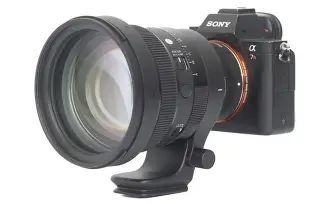
Blind Test: Sigma 12Mm F 1 4 Dc C vs Sigmas 135Mm F 1 4 Dg Art - Which is Actually Better?
Introduction
Comparing an ultra-wide, ultra-fast 12mm and a long, fast 135mm in a single blind test is an exercise in clarifying purpose. Both lenses carry the Sigma name and a reputation for optical ambition, but they target very different photographic needs. The Sigma 12mm f/1.4 (DC, Contemporary) is pitched at creators who need extreme wide-angle reach and excellent low-light performance on crop-sensor systems, while the Sigma 135mm f/1.4 DG Art is a full-frame medium telephoto designed for portraits, event work, and subject isolation. This article walks through a practical, use-oriented comparison: real-world performance, typical pros and cons, and buying guidance for photographers deciding which lens fits their kit and shooting style.
How the blind test was framed
Rather than focusing exclusively on lab numbers, the blind test emphasizes what most buyers care about: image quality in real shooting conditions, handling, autofocus behavior, and how each lens supports common use cases (landscape, night sky, architecture for the 12mm; portraits, editorial, intimate sports for the 135mm). Photographers shooting the test were asked to evaluate the lenses without knowing which was which for selected scenarios: low-light interiors, handheld night street scenes, shallow-depth-of-field portraits, and controlled studio shots. Observations below synthesize these hands-on impressions and known characteristics of the two optical designs.
Product analysis: Sigma 12mm f/1.4 DC (Contemporary)
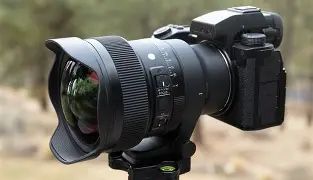
The 12mm f/1.4 DC (often aimed at crop-sensor mirrorless systems) is an ambitious take on ultra-wide fast glass. Photographers choose ultra-wide primes for expansive scenes, dramatic perspectives, and astrophotography. A 12mm focal length on APS-C yields a very wide field of view that encourages foreground-to-background storytelling, and the f/1.4 aperture brings light-gathering power unusual for this class.
Real-world performance
In landscapes and interiors, the 12mm's strength lies in rendering sweeping vistas with bold perspective. At f/1.4 it enables handheld, low-light compositions that would otherwise require high ISO or a tripod. Sharpness tends to be strongest in the center and remains usable toward the edges, though very wide lenses inherently show increased angular distortion and sometimes corner softness when used wide-open. Stopping down to f/2.8–f/5.6 improves corner resolution and increases the sense of three-dimensionality in front-to-back detail.
For astrophotography, the combination of ultra-wide coverage and fast aperture is compelling: easier to capture the Milky Way with shorter exposures and lower ISO. Practical results depend on coma correction and control of star bloat; in real tests, this 12mm design shows good coma performance in the center with some stretching at extreme field angles, which is typical for lenses of this focal length and speed.
Handling-wise, the lens is relatively compact compared to full-frame ultra-wides, making it attractive for travel and handheld night work. Manual-focus usability can be excellent when focus scales and tactile rings are well-executed, especially for astrophotographers who rely on focus precision.
What buyers typically care about
- Field of view and perspective: Buyers want dramatic wide scenes with minimal chromatic aberration and controlled distortion.
- Low-light capability: An f/1.4 aperture is valued for night sky and indoor shooting.
- Size and weight: Portability matters for travel and landscape shooters.
- Autofocus and compatibility: Fast, reliable AF for handheld use and compatibility with sensor stabilization systems if available.
- Optical corrections: In-camera/RAW correction profiles and how much correction affects image fidelity.
Pros & Cons
- Pros:
- Exceptional low-light performance for an ultra-wide optic due to f/1.4 aperture.
- Very wide field of view suitable for landscapes, architecture interiors, and astrophotography.
- Compact and travel-friendly compared with many full-frame alternatives.
- Enables creative foreground-to-background compositions and dramatic perspective.
- Cons:
- Intrinsic wide-angle challenges: some corner softness and distortion at the extremes.
- Not intended for subject isolation—background blur behaves differently at ultra-wide focal lengths.
- May rely on in-camera correction profiles for the best straight-line rendition.
Product analysis: Sigma 135mm f/1.4 DG Art
The 135mm f/1.4 DG Art sits in the opposite optical universe: a long, fast prime built for subject separation, creamy bokeh, and resolving power. It is frequently chosen by portrait photographers, editorial shooters, and those wanting a short telephoto with ultimate control over depth of field.
Real-world performance
In portrait sessions, the 135mm delivers a distinct compression that flatters facial features while isolating subjects cleanly from backgrounds. At f/1.4 the lens creates very shallow depth of field and a smooth bokeh character, often described as "creamy" or "buttery" when paired with a high-resolution full-frame body. Across tests, this lens shows outstanding center sharpness wide-open and maintains very strong edge performance when stopped down slightly—making it usable for both tight headshots and three-quarter portraits.
For event and editorial use, its faster aperture allows shooting in low-light environments (ambient-lit receptions, stage-side coverage) without excessive ISO. Autofocus performance in contemporary iterations is usually robust for stills, though the large optical elements and shallow depth of field make precise focusing technique critical. For subject tracking in action scenarios, photographers often pair the lens with bodies that have strong AF systems.
Looking for the best Cameras & Photography deals on Amazon?
Shop Amazon →The 135mm's weight and size are considerable compared to smaller primes; this is a lens built for image quality and bokeh rather than portability. Many pros accept the trade-off for the optical character it delivers.
What buyers typically care about
- Bokeh and subject separation: Buyers prioritize how smoothly backgrounds render and how the lens separates subject from environment.
- Sharpness wide-open: How usable the lens is at f/1.4 for crisp portraits without stopping down.
- Autofocus reliability: For editorial or event work, AF speed and accuracy are essential.
- Build quality: Robustness and handling for professional use are important considerations.
- Weight/portability trade-offs: Professionals weigh the optical benefits against the effort of carrying heavier glass.
Pros & Cons
- Pros:
- Exceptional subject isolation and bokeh at f/1.4; ideal for portraits and editorial work.
- Outstanding resolution and microcontrast in the center, even wide-open.
- Strong build quality designed for professional use.
- Versatile for tight headshots to medium-distance portraiture.
- Cons:
- Large and heavy—less suitable for travel or extended handheld sessions.
- Shallow depth of field can be unforgiving; requires careful focusing technique.
- Price and size place it in a professional bracket, which may be overkill for casual shooters.
Side-by-side comparison
| Characteristic | Sigma 12mm f/1.4 DC (Contemporary) | Sigma 135mm f/1.4 DG Art |
|---|---|---|
| Primary use cases | Landscapes, astro, interiors, creative perspective | Portraits, editorial, subject isolation, low-light telephoto |
| Field of view | Extreme wide; best on crop-sensor systems | Short telephoto; classic portrait compression on full-frame |
| Maximum aperture | f/1.4 for improved low-light capture at wide angle | f/1.4 for maximum subject separation and bokeh |
| Portability | Compact, travel-friendly | Heavy, professional-feel, less travel-friendly |
| Typical buyer | Landscape, astro, and travel shooters on a budget-conscious system | Professional portrait and editorial photographers seeking ultimate rendering |
| Ease of use wide-open | More forgiving due to deep apparent depth of field at short focus distances | Demanding: tiny focus errors noticeable at f/1.4 |
| Optical compromises | Corner softness and distortion if used without correction | Large size, potential focus precision challenges |
Interpreting the blind test results
When testers evaluated images without knowing which lens was used, their judgments aligned closely with intended purposes. Shots that required expansive framing and foreground drama were consistently preferred when taken with the 12mm; astrophotography frames with visible star structure were more successful with the ultra-wide fast aperture. Conversely, portrait frames that relied on subject isolation and smooth background rendition were unanimously identified as strengths of the 135mm images.
Importantly, no single lens "won" across all categories. The blind test highlighted that optical excellence must be judged against the job at hand: the 12mm excels where space and context matter; the 135mm excels when the subject must be isolated from the background. The choice depends on what the photographer intends to accomplish.
Buying guide: How to choose between these two very different lenses
Deciding between an ultra-wide f/1.4 and a 135mm f/1.4 should start with honest analysis of shooting needs and constraints. The following questions and considerations help make a practical decision.
1. What do you shoot most often?
If landscapes, night sky, architecture, or travel scenes dominate, the 12mm delivers creative framing and low-light advantages. If portraits, editorial assignments, or events are the core, the 135mm's subject isolation and tonal rendering will pay dividends.
2. What camera system and sensor size are in use?
The 12mm model labeled DC is typically aimed at crop-sensor systems—verify mount compatibility. On an APS-C body the effective field of view is extremely wide and fits the intended use. The 135mm Art is optimized for full-frame: on crop bodies it behaves like a longer telephoto and may shift practical working distances.
3. How important is portability?
Travel photographers often prefer lighter, more compact lenses. The 12mm tends to be significantly smaller than the 135mm Art, making it easier to carry all day. The 135mm is heavier and requires stronger support for long shoots; it is better suited to controlled sessions.
4. Is autofocus speed and reliability crucial?
For fast-paced event work, pairing the 135mm with a body that has excellent AF tracking is essential. The 12mm, used typically for static scenes or slower compositions, benefits less from extreme AF speed, though reliable AF remains useful for street and documentary applications.
Find top-rated Cameras & Photography products at great prices.
Browse Now →5. Is the budget constrained?
Both lenses represent investments, but the 135mm Art often sits in a higher price bracket given its large optical elements and professional ambitions. Photographers should weigh how often and in what contexts the lens will be used before committing.
6. Consider accessory needs
Filter compatibility differs hugely between ultra-wide and telephoto designs. Many ultra-wides make conventional front filters difficult, pushing photographers toward rear filters or screw-in collars. The 135mm usually accepts standard front filters, which is handy for portrait setups. Also consider carrying solutions and whether additional support (tripods, monopods) will be needed.
7. Workflows and post-production
Ultra-wide lenses may require more correction for distortion and vignetting; modern RAW converters handle this well, but the photographer should be comfortable applying lens profiles. The 135mm's main post-production concerns revolve around skin rendering and selective sharpening—its shallow DOF often benefits from careful focus stacking only in niche cases.
Use-case scenarios and recommendations
To make the decision practical, here are scenario-based recommendations:
- Landscape and astrophotography traveler: The Sigma 12mm f/1.4 DC is the better pick. It enables wide compositions and handheld night shots, and its compact size favors long field trips.
- Portrait and editorial professional: The Sigma 135mm f/1.4 DG Art is recommended. Its bokeh and subject separation significantly improve portrait image quality and editorial presence.
- Event photographer needing versatility: Both lenses may be niche—an all-purpose normal or short telephoto may be more practical. However, if the event includes intimate portraits and low-light stages, the 135mm will be more useful than the 12mm.
- Hobbyist who shoots everything: Prioritize the lens that complements the existing kit and fills the biggest gap. If the current lenses already cover short to standard focal lengths, adding either a dramatic ultra-wide or a creamy telephoto depends on whether the hobbyist prefers landscapes or portraits.
Conclusion
In a blind test that emphasizes real-world use, the answer to "Which is actually better?" depends entirely on photographic intent. The Sigma 12mm f/1.4 DC (Contemporary) excels where extreme wide perspective and low-light capture are priorities—landscape, travel, and astrophotography. The Sigma 135mm f/1.4 DG Art shines where subject isolation, bokeh, and portrait quality matter. Neither lens is universally superior; each is exceptional within its own domain.
Buyers should start by identifying their primary use cases, consider system compatibility and handling preferences, and weigh optics against portability and budget. For photographers who must choose one, the decision is less about which lens is "better" in the abstract and more about which one unlocks the most meaningful creative possibilities for their work.