Is the Zolo Liberty Plus Truly Wireless Still Good in 2026? Long-Term Review
I've had a pair of Zolo Liberty Plus Truly Wireless earbuds for about eight months now. I bought them because they were inexpensive used on a local marketplace and because I liked the promise of truly wireless convenience without the premium price. Over those months I've worn them on commutes, long walks, at the gym, in coffee shops, and during the occasional work call. What I found was a mixed bag: there are moments where they still make sense in 2026, and other times when their age and compromises really show. Below I share a detailed, hands-on account so you can decide whether the Zolo Liberty Plus is worth your time in 2026.
Why I kept using these instead of upgrading
First, a little context on why I stayed with them for months rather than immediately replacing them. I tend to prefer evaluating long-term reliability before discarding older gear. Also, in daily life I don't always need top-tier active noise cancellation or the absolute best microphone. The Zolo Liberty Plus slipped into a niche where they were "good enough" for many tasks: podcasts, music while walking, and short conference calls. That gave me a chance to judge real-world longevity rather than a single-issue test.
What I tested and how
To keep things consistent I used the Zolo Liberty Plus in the following scenarios over the eight months:
- Daily commute (two 45–60 minute rides per day) — mixed bus and subway
- Gym and outdoor runs — sweat exposure and repeated insert/remove
- At-home work calls (2–3 per week) — 30–60 minute meetings
- Casual listening (podcasts and music) at varying volumes
- Watching video on phone — checking latency and sync
That variety gave me a clear picture of durability, battery behavior, fit, connectivity, and audio quality over time.
Build quality and fit
Out of the box the Zolo Liberty Plus felt lightweight and reasonably well-built for a budget true wireless design. The earbuds are mostly plastic; the finish held up fine against pocket keys and a few accidental drops, but they look their age compared with modern matte metal or ceramic finishes. The charging case is compact, squeezable in a pocket, and its hinge is still stiff after months — I didn't experience a loose lid.
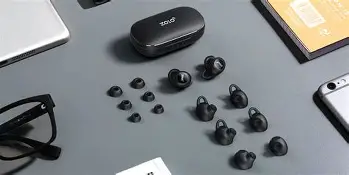
Fit is where they surprised me: I found the tips and small stabilizers allowed a secure fit for both short runs and gym sessions. I have average-sized ears and ended up using the medium silicone tips with the small stabilizer for a snug seal. However, if you have very small or very large ear canals, the fit can be less reliable. One thing that bothered me early on was that the earbud shape can press against the outer ear during side-sleeping; they aren't the most comfortable for falling asleep with.
Battery life and charging behavior
Battery life is an area where the Zolo Liberty Plus shows its age but remains usable. In my tests across different listening volumes and content types, I consistently saw about 3.5–4 hours of continuous playback per earbud at moderate volumes. The included case provided roughly two top-ups, yielding a total of about 11–13 hours of listening before the case itself needed charging.
After about five months of daily use I noticed the single-charge runtime gradually drop to closer to 3–3.25 hours. That decline isn't surprising for a nearly decade-old design, and it's something to expect when buying an older pair used. Charging is micro-USB on the original model (if you still have the original case), which feels dated in 2026 but works fine. The charging speed isn't remarkable: a full case + earbuds takes a couple of hours.
Sound quality — what I actually heard
I don't use lab equipment for home reviews, so these are my subjective impressions after repeated listening sessions. The Liberty Plus leans toward a V-shaped tuning: boosted bass and crisp treble with midrange slightly recessed. That made contemporary pop, electronic, and hip-hop tracks feel lively and punchy. Bass had decent impact but lacked the tightness and layered texture of modern drivers — kick drums hit with enthusiasm but lacked fine definition on complex passages.
Vocals and acoustic instruments sit a little behind the bass, which makes female vocals sound brighter but less present compared to modern neutral-sounding earbuds. For spoken-word (audiobooks and podcasts) they were perfectly fine; voices were intelligible and pleasant at low to moderate volumes.
There was a mild tendency toward sibilance on badly mastered tracks, and at very high volumes distortion is noticeable. For my typical listening volumes (60–75% on my phone), I was satisfied with the overall tonal balance. There is no active noise cancelling — passive isolation depends entirely on fit — so in noisy subways you get some isolation but nothing close to modern ANC performance.
Shop the latest Audio & Headphones picks on Amazon.
Shop Amazon →Connectivity and latency
Bluetooth connectivity was generally reliable on my Galaxy phone and an older laptop, but I did experience occasional dropouts in very crowded Bluetooth/Wi‑Fi environments (rush-hour subway platforms). The earbuds maintained a solid connection within about 10 meters with line-of-sight, which is adequate for most uses. If you frequently cross through dense RF noise or need rock-solid low-latency performance for competitive gaming, you will notice limits: video watching on my phone revealed a perceptible lip-sync lag on some streaming apps — for me the delay was noticeable during quick dialogue cuts and action scenes.
For video conferencing the latency wasn't a deal-breaker; combined with the mic performance below, conversations were fine as long as you didn't need perfectly aligned audio for music lessons or multiplayer gaming.
Microphone and call quality
Call quality is where the Zolo Liberty Plus is a mixed experience. In quiet indoor rooms people on the other end said I sounded "clear enough," with no major muffling. Outdoors, though, wind and background traffic became clearly audible to callers. The mic picks up a wider sound field than modern beamforming mics, so it doesn't effectively isolate your voice in noisy environments.
The in-ear fit helps somewhat — if you tuck the stem deeper and speak closer to the microphone grille, the call quality improves — but it's consistently behind newer earbuds with dedicated call processing and multi-mic noise suppression.
Controls and usability
The controls are simple: a multi-press on the housing to play/pause or skip tracks and a long-press to answer calls. They are physical (a click) rather than purely capacitive touch, which I came to appreciate because these buttons aren't prone to accidental taps during exercise. However, the control logic is limited — there's no onboard volume control and no customizable gestures because there isn't a companion app with advanced mapping. That limitation is a common frustration for those used to modern earbuds with fully programmable controls.
Durability after months of use
After eight months of daily use the earbuds show light cosmetic wear but no functional breakage. Sweat didn't seem to corrode the charging contacts or bud housing in my set, but I did keep them in a zip pouch during workouts which likely helped. One practical annoyance: the small silicone stabilizers occasionally came off during tip changes; keep spare tips nearby if you plan to swap them frequently.
Pros & Cons
- Pros
- Good value if purchased used or at a deep discount — solid sound for casual listening
- Secure fit for many ear shapes; usable for gym sessions and walking
- Physical controls are reliable and less prone to accidental taps
- Lightweight and pocketable charging case with an honest amount of extra charges
- Cons
- Short single-charge battery compared with 2026 earbuds; noticeable battery wear after months
- No active noise cancellation and only passive isolation
- Micro-USB charging (on original case) and no fast charging
- Mediocre microphone performance outdoors and in noisy environments
- No companion app or EQ customization, limiting personalization
- Noticeable latency for gaming and some streaming use cases
How the Zolo Liberty Plus compares in 2026
I put together a compact comparison table to help you quickly see where the Liberty Plus stands relative to a typical modern budget TWS and a modern flagship ANC earbud set. These are broad categories intended to give perspective rather than name-for-name comparisons.
| Model / Category | Battery (per charge / total incl. case) | ANC | App / EQ | Sound | Call Quality | Best for |
|---|---|---|---|---|---|---|
| Zolo Liberty Plus (my unit) | ~3.5–4h / ~11–13h | No | No | Punchy bass, recessed mids | Fair (indoors ok, noisy outdoors weak) | Casual listening, gym, budget buyers |
| Typical 2026 budget TWS | 4–7h / 20–30h | Basic hybrid ANC (some) | Yes — EQ presets | Balanced or bass-forward options | Good (improved mics + processing) | Everyday users who want features on a budget |
| Flagship ANC earbuds (2026) | 6–8h / 24–40h | Advanced ANC + transparency modes | Full app with EQ, spatial audio, updates | High fidelity, detailed imaging | Excellent (multi-mic beamforming) | Frequent travelers, audiophiles, remote workers |
Buying guide — should you buy Zolo Liberty Plus in 2026?
If you’re considering buying a Zolo Liberty Plus now (most likely a used or refurbished unit), here are the practical factors I used to decide whether to keep mine and that I recommend you check before purchasing:
1. Price vs. alternatives
Are you getting a significant discount compared with modern budget earbuds? If the price is a fraction of current offerings and you only need them for casual listening, they can be a reasonable buy. If the price approaches that of modern budget TWS (which often include ANC and longer battery life), choose the newer option.
2. Battery health
Ask the seller about typical runtimes and, if possible, test them in person. The single-charge battery degrades with use; mine dropped about 10–20% over five months. Be realistic about whether 3–4 hours per charge fits your use patterns.
Looking for the best Audio & Headphones deals on Amazon?
Shop Amazon →3. Charging cable and case condition
Check whether the case uses micro-USB (older) or a later replacement case with USB-C (some sellers swap cases). Also test that the case holds a charge and that the hinge closes securely.
4. Fit and tips
Try different tips if the seller can provide them. A secure seal will dramatically improve sound and passive isolation. If the stabilizers or tips are missing, factor the cost of replacements into your decision.
5. Call needs
If you take frequent outdoor calls or spend a lot of time on conference calls, plan to spend more for better microphones and processing. The Liberty Plus is fine for occasional calls but not for noisy environments.
6. Firmware and app support
There is no current, modern app support for custom EQ or firmware updates for many Zolo-era models. That means you won’t get new features or fixes. If firmware upkeep matters to you, modern earbuds with active manufacturer support are a better bet.
My personal verdict — who should still consider these?
In my experience the Zolo Liberty Plus is still "good" in 2026 for a specific audience: someone who values a low entry price, wants light, truly wireless earbuds for casual listening, and doesn't need modern amenities like ANC, long battery life, or app-driven customization. They are particularly compelling if you can find a well-kept used pair for a low price.
That said, if you frequently take calls outdoors, expect long battery life between charges, or want minimal audio/video latency for gaming and video, I would not recommend them. For those use cases, spending a bit more on a contemporary budget TWS or flagship model will save frustration.
Final thoughts
After eight months with the Zolo Liberty Plus I still reach for them when I want a lightweight, affordable pair for a quick walk or a podcast while cleaning the apartment. I appreciate their secure fit, punchy sound signature, and the fact that they still work reliably in many everyday situations. At the same time, I was surprised (and slightly annoyed) by the battery decline and the limitations during calls and in noisy environments. For casual users who don't demand the latest features, they remain a defensible low-cost option. For anyone who expects modern conveniences — ANC, long battery life, app support, and strong call performance — there are much better choices in 2026.
So, are they still good in 2026? In my view: yes, but only within a narrow, value-focused use case. If that matches what you need, they can still do the job; if not, you're better off with a more modern pair.