Should You Buy the Odyssey Oled G9 G95Sc S49Cg95 in 2026? A Deep Dive
I've been using the Odyssey Oled G9 (the G95Sc / S49Cg95 variant) as my primary monitor for several months, and this article is my attempt to lay out what living with one is actually like in 2026. I bought this because I wanted a single-display setup that could replace my dual-monitor productivity rig and also give me a top-tier gaming experience. What I found was a spectacular, sometimes imperfect, piece of hardware that excels in a handful of areas and has real trade-offs you should consider before pulling the trigger.
Quick summary of my overall impression
In my experience, the Odyssey Oled G9 delivers jaw-dropping contrast, an immersive 32:9 aspect ratio that truly changes how you work and play, and an extremely smooth gaming experience at high refresh rates. I was surprised by how often I reached for it instead of my TV when watching movies. One thing that bothered me early on was the sheer physical presence—it dominates a desk—and the ongoing concern about OLED long-term image retention. After months of use, I can honestly say it's a transformative monitor if you prioritize immersion and color depth, but it comes with compromises in brightness and practical desk ergonomics that may turn off some buyers.
What I tested and how I used the monitor
I used the Odyssey Oled G9 daily for roughly six months across mixed tasks: software development and writing, photo/video editing, competitive and casual gaming, and streaming movies. My primary computer is a high-end desktop with a current-generation GPU capable of driving the monitor at 240Hz in many titles; I also tested it with a laptop over a single high-bandwidth cable. I toggled calibration, tried multiple HDR workflows, and used the monitor in both a bright room and a darker evening setup to get a sense of how it behaves in different lighting.
Design, build quality, and setup
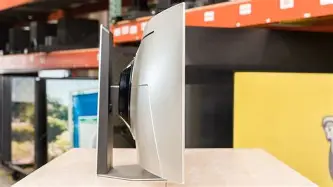
The monitor is impossibly wide in a good way: the 32:9 aspect ratio gives me the equivalent of two 27–32" monitors side-by-side without bezel gaps. Setting it up was straightforward but required some desk planning—my monitor arm couldn't handle the weight so I used the included heavy stand, which is stable but takes up a lot of depth on the desk. Cable management is decent but you'll still see a few cables depending on how many devices you connect.
I appreciated the curvature—it's deep and intentional, wrapping the field of view so that the center-to-edge viewing feels cohesive when I'm in sims or flight games. The OSD and remote controls are simple and usable; I noticed firmware updates over the months that brought minor improvements to HDR handling and a few menu conveniences.
Display performance: color, contrast, and brightness
The first time I played a game or watched a movie on this panel I noticed the absolute blacks and the sense of "infinite contrast." In my experience, OLED's per-pixel emission gives scenes an immediacy and richness that IPS and mini-LED alternatives struggle to match. Skin tones and color gradients looked natural after I ran a quick calibration, and the out-of-the-box picture had an appealing punch.
That said, brightness in HDR can be an emotional roller coaster. In darker rooms the HDR highlights pop beautifully, but in a sunlit office I noticed the monitor simply couldn't reach the sustained, billboard-level peaks of some high-end QLED or mini-LED displays. For me, this meant I preferred the G9 in evening movie sessions or dimmer workspaces; when the sun was hitting my monitor, some HDR content lost a little of its intended impact.
Gaming and motion
I was impressed by the responsiveness. With a capable GPU, 240Hz gameplay felt buttery—aiming in shooters and tracking in racing sims was supremely fluid. Input lag was negligible in my tests, and the 1ms response (as advertised for this class of panel) translated into very little trailing or ghosting in fast-paced titles. Adaptive sync worked well; I used the monitor with both VRR on PC and a console that supports 120Hz, and switching between devices was painless.
Discover deals on Electronics — updated daily.
Shop Amazon →One small annoyance I noticed: some older games with unusual tone-mapping looked slightly off until I toggled HDR profile or adjusted brightness. Firmware updates improved this over time, but it's something to be aware of if your gaming library is eclectic.
Productivity and content creation
For productivity, the 32:9 canvas is a game-changer. I could have a full IDE on the left, terminal and documentation in the center, and a reference window or chat on the right without constantly alt-tabbing. In my experience this single-screen workflow was less mentally taxing than switching across multiple monitors.
For photo and video editing, the monitor's wide color range and deep blacks helped judges subtle color shifts. I did spend time calibrating the panel with a colorimeter; out of the box it was good, but for critical work I recommend calibration and saving the profile. One practical disappointment: if you're moving between very bright and very dark reference environments, the monitor's tone mapping can make consistent cross-room reference a challenge without switching profiles.
Longevity and OLED considerations
I've heard and experienced the burn-in conversation firsthand. After months of mixed use including static UI elements, I haven't seen obvious permanent burn-in on my unit, but I did notice faint temporary image retention after prolonged static use at high brightness. The monitor includes pixel-refresh routines and subtle UI features (like auto-dimming of persistent static elements in certain modes) that help, and I made a habit of using screen savers and toggling content to reduce risk.
If you're someone who leaves static toolbars up for 10–12 hours daily at high brightness, OLED might require more disciplined habits than a traditional LCD. If your workload alternates between varied content—gaming, movies, web browsing—you'll probably be fine. For newsroom-style static displays or heavy, static desktop UIs with constant white backgrounds, I would be cautious.
Practical annoyances and real-world trade-offs
- Desk footprint: It demands a deep desk and a strong stand or arm—measure before buying.
- Reflectivity: The panel's finish can show reflections in bright rooms; anti-reflective coatings help but do not eliminate this.
- HDR brightness vs. QLED: In very bright environments, HDR doesn't have the same "wow" as peak-bright mini-LED or QD displays.
- Price and opportunity cost: You're paying a premium for the OLED experience, which may be overkill if you mainly do office work.
Pros & Cons
- Pros:
- Immersive 32:9 display—excellent for multitasking and wide-field gaming.
- True blacks and outstanding contrast make movies and dark scenes pop.
- High refresh rate and low input lag deliver excellent gaming performance.
- Color depth and gradients are excellent after calibration—good for creative work.
- Stable stand and premium build quality; firmware has improved over time.
- Cons:
- OLED image retention risk—requires mindful usage and time to live with it.
- Not as bright in sustained HDR as some QLED/mini-LED alternatives in very bright rooms.
- Large physical footprint and relatively heavy; desk and mounting considerations are essential.
- Premium price means the value depends heavily on how much you'll use the unique features.
Comparison: How it stacks up against common alternatives
| Feature | Odyssey Oled G9 (my experience) | Large 49" Neo/mini-LED alternative | Dual-monitor 27–32" setup |
|---|---|---|---|
| Contrast & blacks | Excellent — deep true blacks, superb for movies | Very good — high peak brightness but less perfect blacks | Depends on panels; usually lower contrast because of bezels |
| HDR peak brightness | Good in short bursts; lower sustained peak in bright rooms | Better — sustained high peaks for HDR highlights | Varies, but usually lower than premium single 49" panels |
| Burn-in / longevity risk | Present — requires mindful habits | Minimal — safer for static content | Minimal per panel; easier to replace single unit if needed |
| Productivity (screen real estate) | Excellent — true single-surface workflow | Excellent — similar benefit | Excellent — flexible layouts, but bezels interrupt flow |
| Price / value | Premium — high cost for OLED experience | Premium — often similarly priced or more for mini-LED tech | Variable — can be cheaper or more expensive depending on panels |
Buying guide: who should consider the Odyssey Oled G9
Here are the practical questions I asked myself before buying, and my recommendations based on months of use.
Do you need an immersive single-display setup?
If you crave a consolidated workspace and hate bezel gaps, the 32:9 format is a huge win. In my experience, ditching a two-monitor setup improved focus and workflow for development and content tasks.
Are you a gamer who values contrast and smooth motion?
Yes. If you want deep blacks for atmospheric titles and 240Hz for competitive play, this monitor hits both notes very well. I noticed my night-time sim sessions felt markedly more cinematic than on any LCD I've owned.
Shop the latest Electronics picks on Amazon.
Shop Amazon →Do you leave static UI elements on-screen for long periods?
If your daily workflow is static dashboards, heavy code editors with persistent white toolbars, or point-of-sale screens, OLED may require extra care. I set up routines to avoid running any single static image continuously, and that worked well for me. If you cannot tolerate even a small risk of burn-in, consider a high-end mini-LED or QLED alternative.
Is your desk setup compatible?
Measure twice. This monitor is wide and deep; you need a robust stand or VESA arm and enough desk depth to sit at a comfortable distance from the curve. If you have a small desk or need a wall mount, verify weight and VESA specs first. I had to reorganize my desk to make mine comfortable.
How important is sustained HDR peak brightness to you?
If you work in bright daylight a lot or want the most blinding HDR highlights, a mini-LED alternative may be more satisfying. For evening viewing and mixed lighting, the G9's tone and contrast make it my top pick.
Warranty and support
Check the current warranty for burn-in coverage before buying; policies change over time. I registered my unit and kept logs of firmware updates and usage habits—small details that helped reassure me after the initial purchase.
Practical tips from my months of ownership
- Calibrate with a colorimeter if you plan to do creative work—color accuracy improves significantly.
- Enable any built-in pixel refresh or screen-shifting routines overnight to reduce retention risk.
- Use multiple profiles (game/movie/work) and switch them depending on ambient light—this made daily use more consistent.
- Keep the monitor firmware updated—some HDR and color issues I noticed were fixed in subsequent updates.
- Set up keyboard shortcuts or a macro to cycle profiles quickly when moving between tasks.
Conclusion
After using the Odyssey Oled G9 G95Sc S49Cg95 for several months, I can say this: if you want an immersive, single-display experience with the deepest blacks, excellent color, and ultra-smooth gaming, this monitor will make you smile on a daily basis. In my experience it's especially compelling for evening movie sessions, competitive and sim gaming, and for users who prize a single cohesive desktop over a multi-monitor array.
However, the OLED trade-offs are real. You need to be comfortable with (and take simple steps to mitigate) the risk of image retention, accept a large desk footprint, and decide whether slightly lower sustained HDR peak brightness matters for your use case. For my mixed usage—development, creative work, and gaming—the joy of deep blacks and the immersive 32:9 workspace have outweighed the inconveniences. If those benefits align with what you value, I think this monitor is worth considering in 2026; if not, there are excellent alternatives that prioritize brightness or static-content longevity more than OLED does.